Clôture de l'amour
by Pascal Lambert
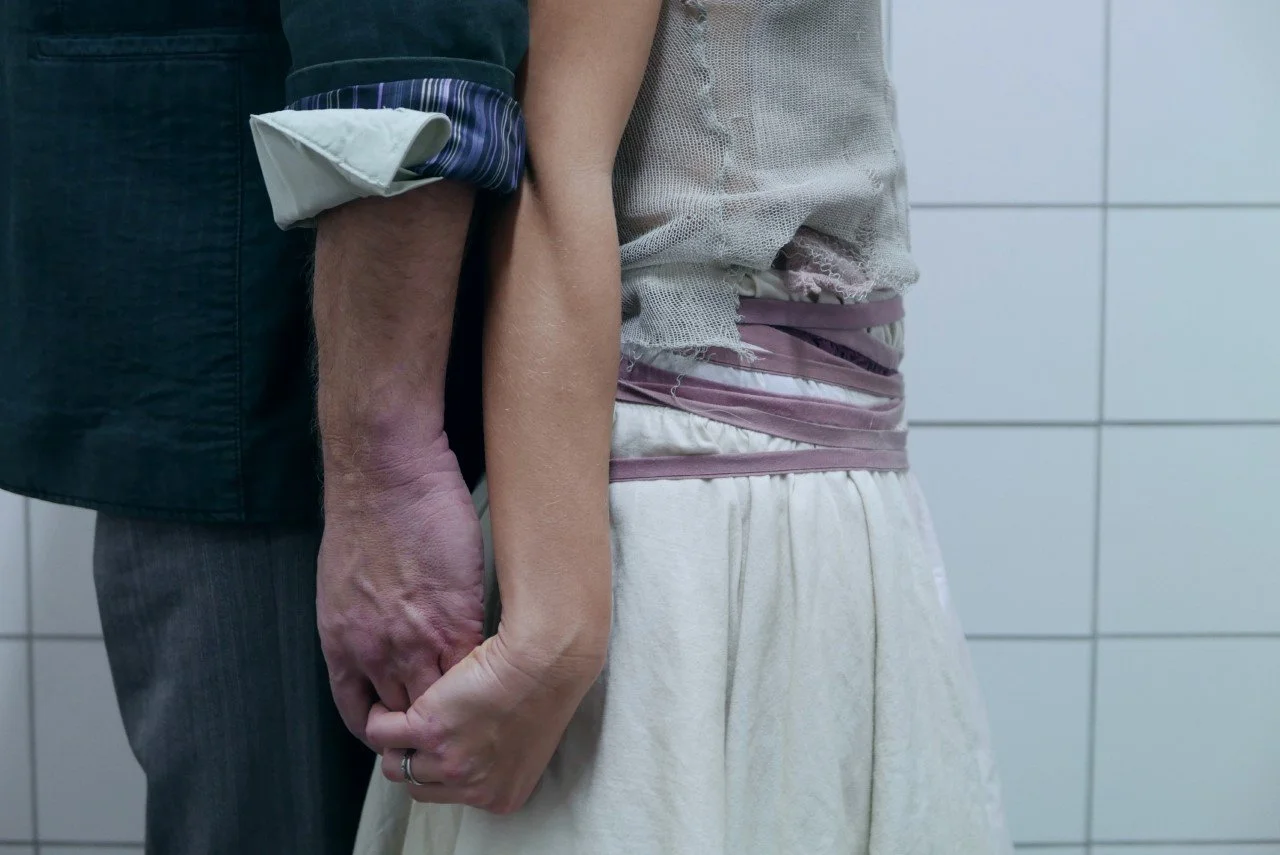
Clôture de l'amour " is an ode to separation. Two lovers-parents-partners, Stan and Audrey have only the use of words to tear each other apart.
A merciless confrontation inhabited by infinite tension.
Two powerful, deep, frightening monologues which cannot be interrupted, a way of settling old accounts and marking the territory of the body in a language pushed to the limit.
Stan “ I wanted to see you to tell you that it's over / it's not going to continue / we're not going to continue / it's going to stop there . . This is Stan speaking. He wants to leave, he will leave. He needs to say, to say until the end, the collapse, the imperfection of the present, to say the desire for another look in which to see oneself, the quest for a possible elsewhere, for a new beginning.
They devastate everything, they dirty everything, the memories, the dreams to come, destroy all the paths of return. Stan utters his break-up with a destructive, tragic rage, throws his sentences like so many bullets from a revolver. He seeks to destroy to kill everything they were as a couple in his violent attempt to escape everything he once wanted.
While he speaks Audrey, doesn't speak, yet bends gently, clenches her fists in her mouth so as not to scream, not to cry. Hold on, stand up. And then she responds.
Audrey aims right, she mows down the words in the concrete of life, exhausts the memory of her body, she recalls the moments, the oaths, the trifles, everything that makes the strength of her love, of her defeat.
She might even forgive. It retains the raw flavor of experience. And it's up to him, to Stan, to take the blows in silence, to fall, slowly. Closure of love, in two relentless rounds.
At the end of Clôture de l'amour, it doesn't matter who wins and loses. We don't care about the individuals. It is love, the attempt to form a couple, the hope of union, the need to belong and to create this togetherness the romantic idea of the eternity of love that fails in front of the audience’s eyes.
Audrey.
[...]
quelle vulgarité
quelle défaite devant le monde
quelle abdication devant le monde
tu n'es pas un général
tu n'es pas un général quatre étoiles
tu es un déserteur
tu passes par la petite porte
tu n'avais pas la carrure pour
pas la carrure pour notre amour
l'habit était trop grand pour toi
l'habit que je t'avais offert non tu n'étais pas taillé pour
tu flottes dedans
tu as raison un mausolée
il sera ton tombeau mais tu y mourras seul
oui sans moi
sans nous
reste où tu es
comme un chien
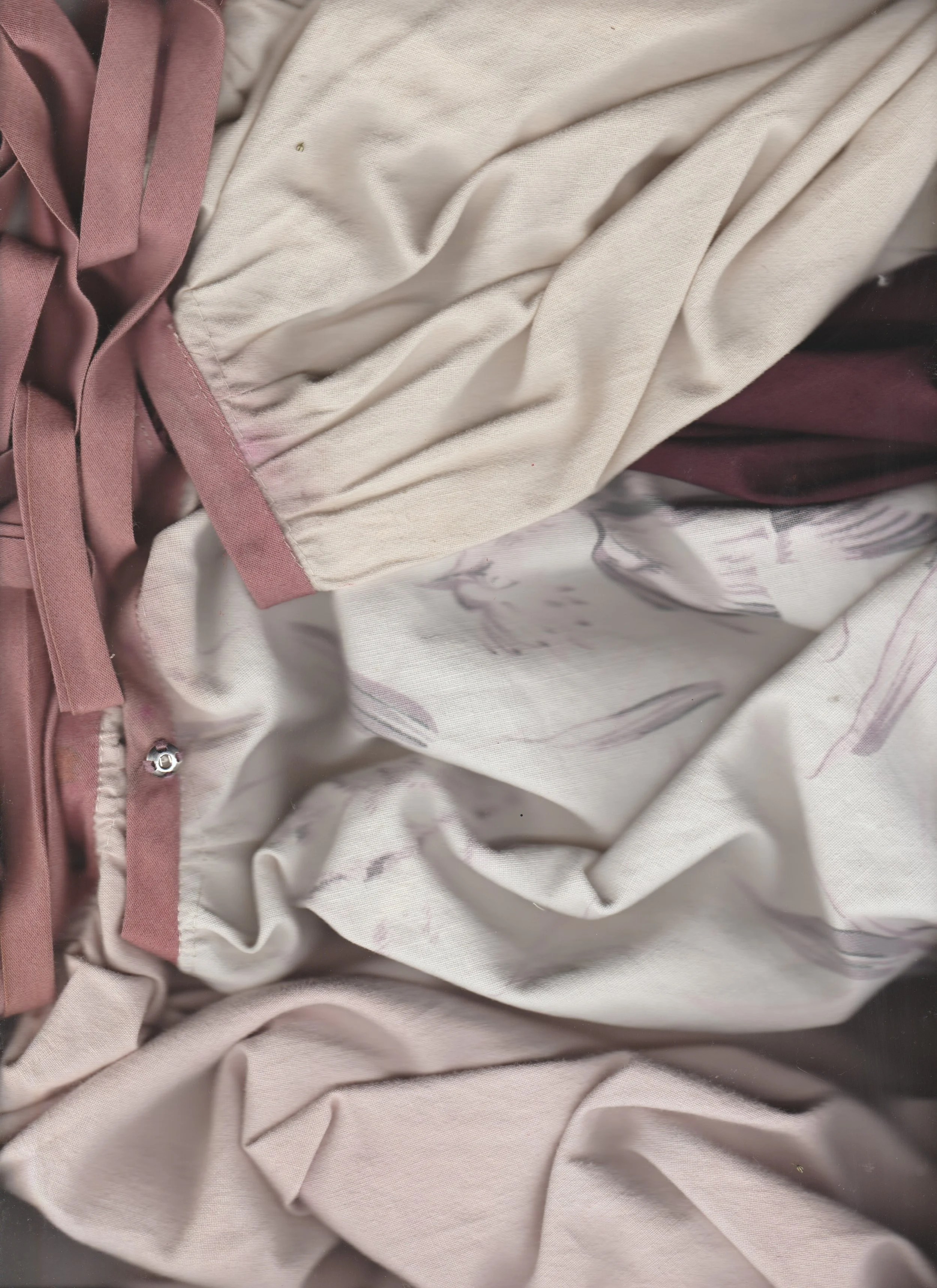
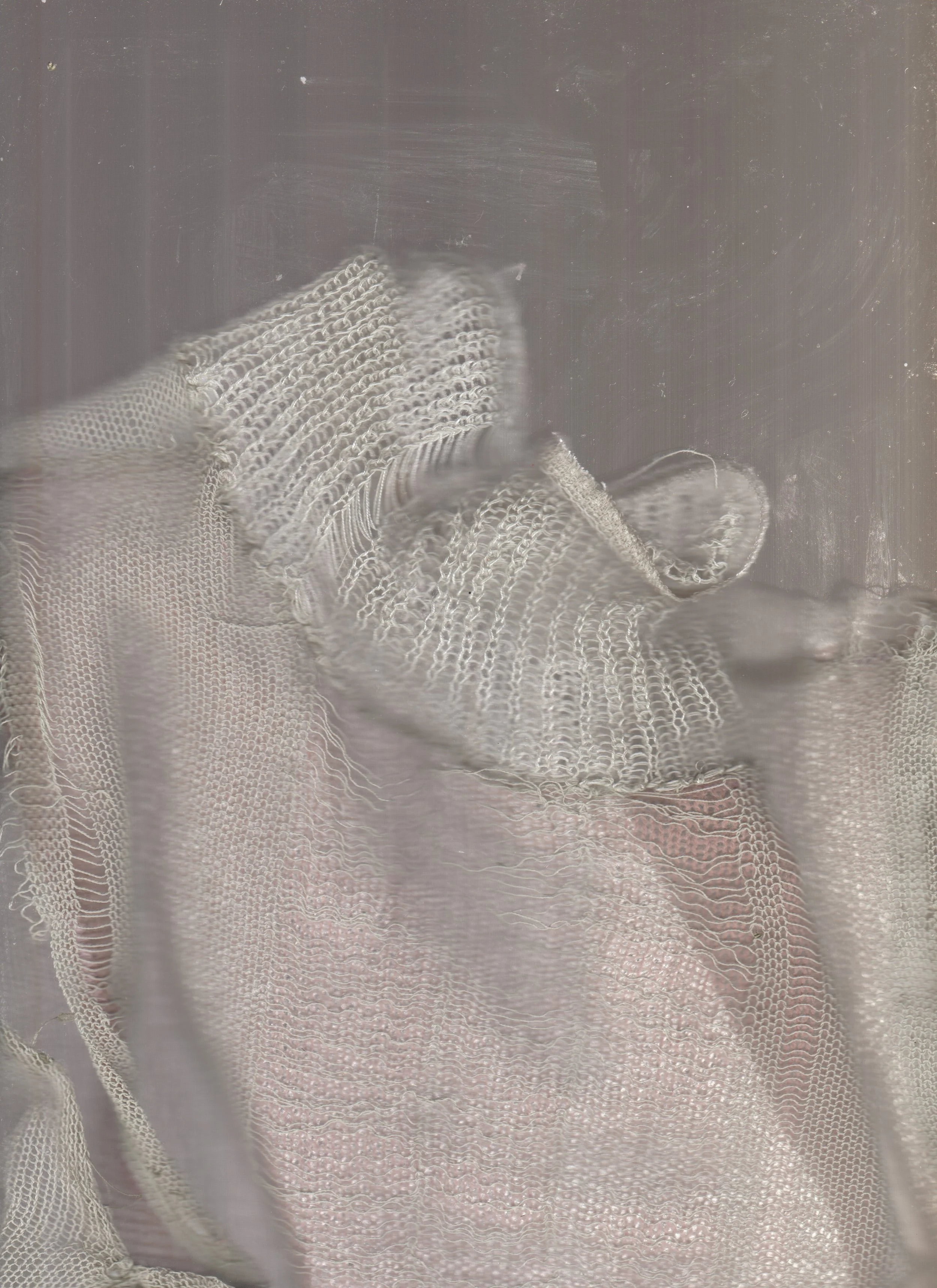
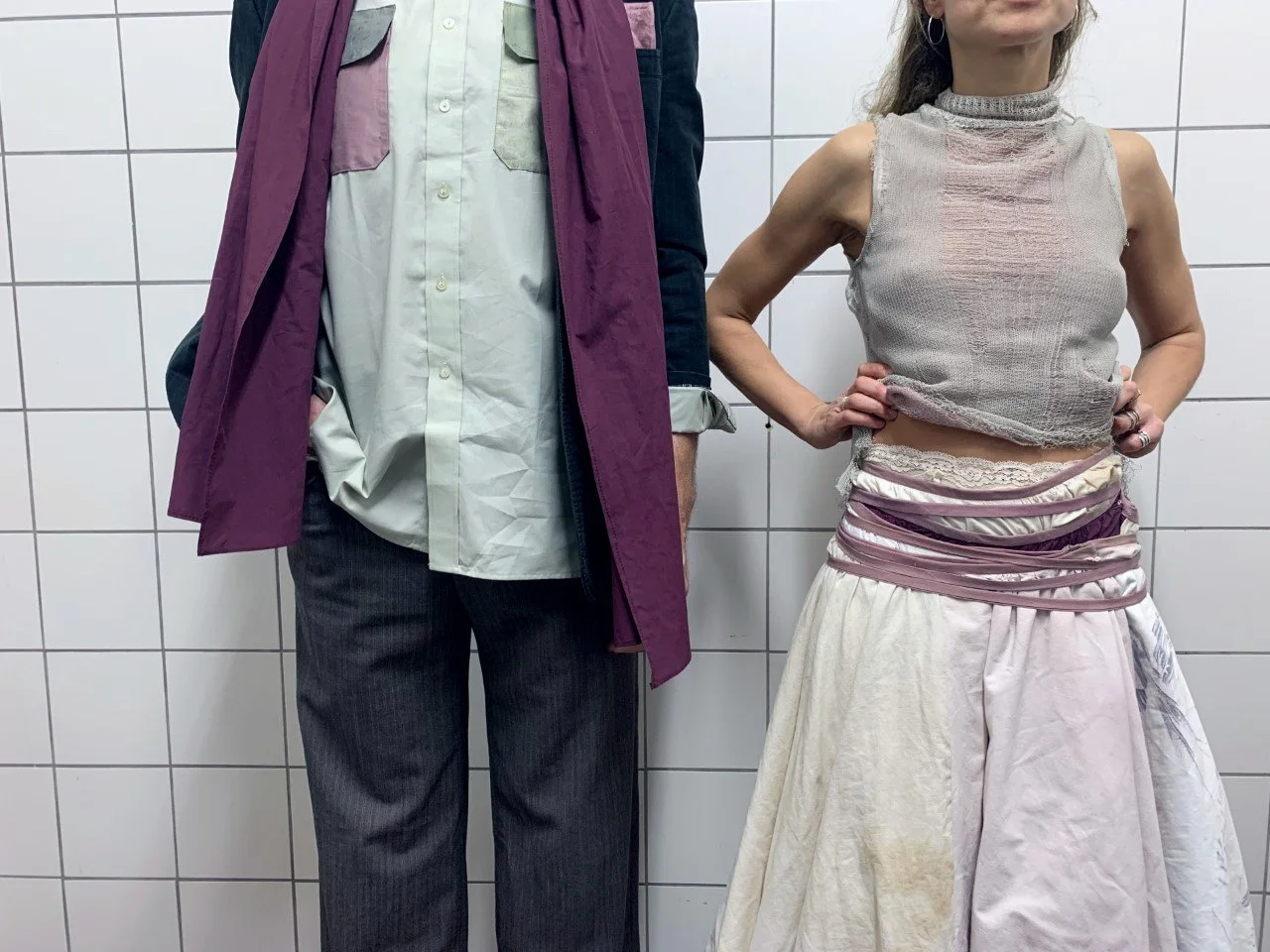
Audrey is wearing an asymmetric folded mid-length skirt made of many layers of bedsheets. Most of them are dyed with red wine, or natural dyes,some of them are stained because they are used.The idea of bedsheets symbolize their bed their past their love her need to belong to hold back her denial to let go. The skirt is built as one single panel that is wrapped around her waist and folded back and forth as you would make a bed. When she unfurls the skirt on top of him she unbuttons the folds which reveals the layers. Her top is a layered two panel knitted top, with laders creating a fragile and textured effect.Stan.
[...]
Je disais l’amour de ma vie et je te regardais
je te regarde et je pense je ne te reconnais plus
ton corps je le connais
les attaches les os tout ça je connais
mais dessous il y a quoi
dessous sous l’enveloppe il y a quoi ?
une sorte de nouveau toi et moi qui n’a rien à voir rien à voir je suis désolé
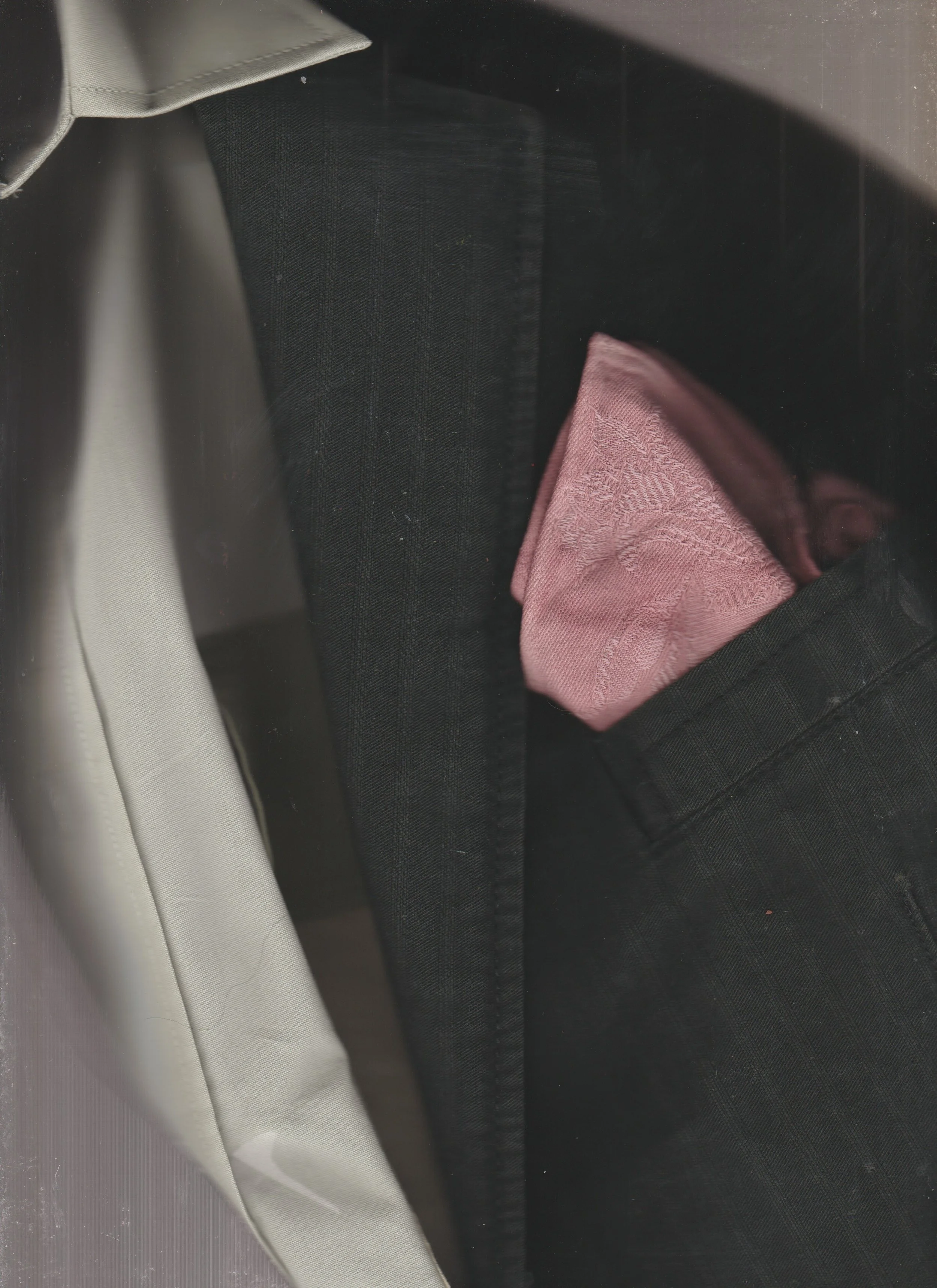
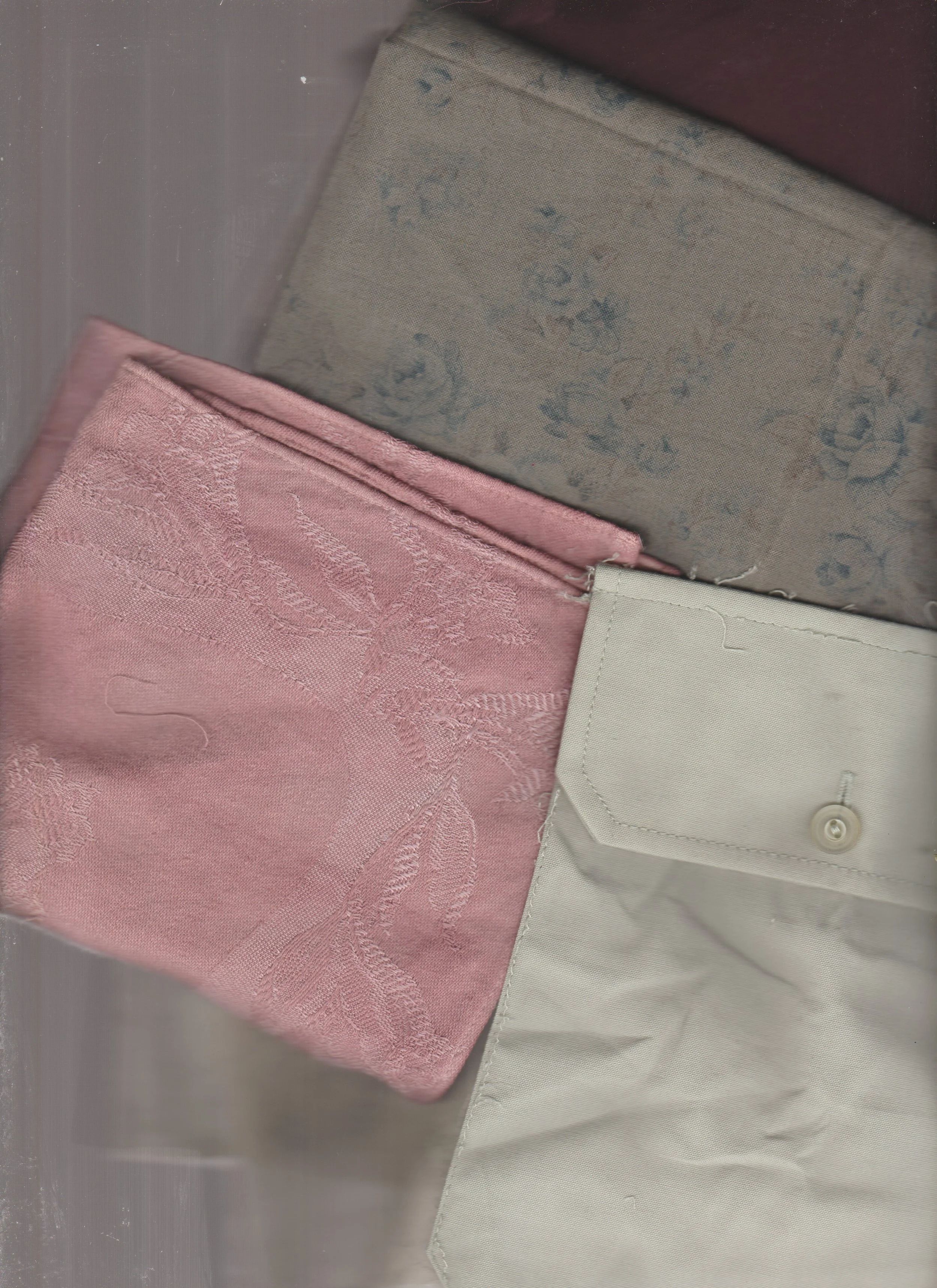
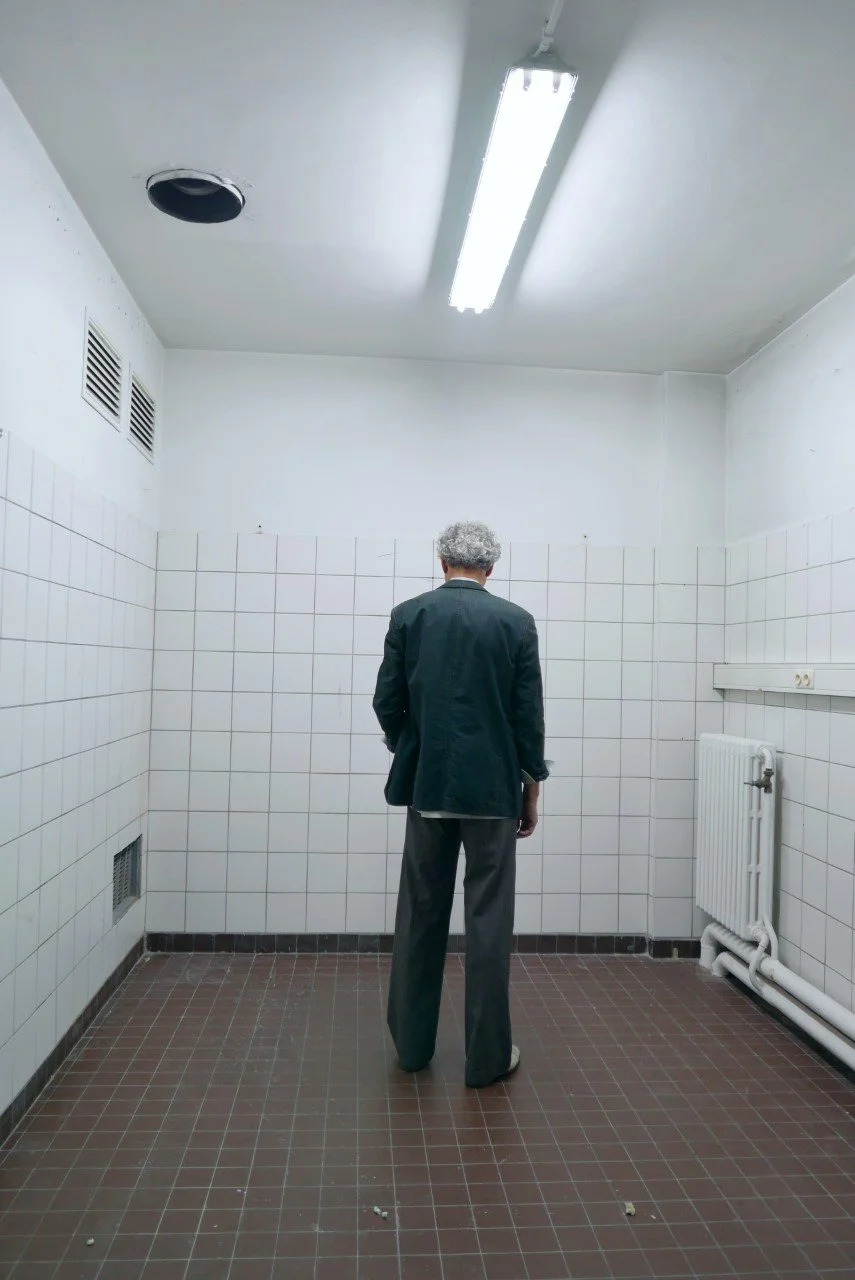
Stan wears a loose suit look. When he enters the room he is wearing a jacket, a shirt with patched pockets and a loose suit trousers. He has a scarf on his neck and a knitted vest underneath the shirt. His silhouette is more structured he is put together and this is a symbol of him being in control and him trying to hold onto this. The shirt is a crisp green color with a sharp collar but we still see his connections to her (bed) in the fabric used for the pockets,