Stenochωreography
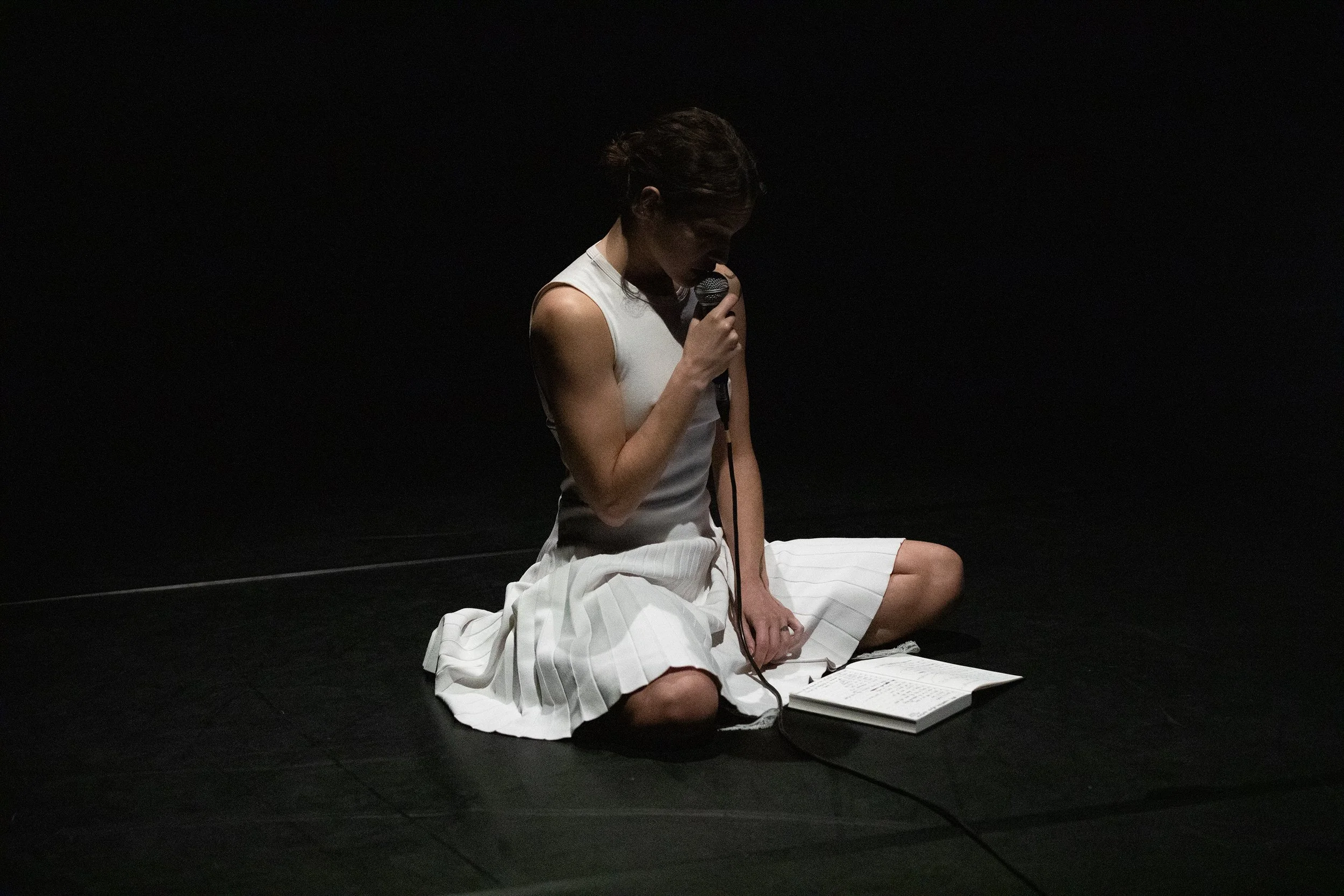
Stenochωreography is a neologism which consists of the words stenochoria and choreography. Στενοχώρια/stenochόria (=sadness, distress, sorrow) which etymologically comes from the adjective στενό/stenó(=tight) and the noun χώρος/chόros(=space), and χορογραφία/choreography which derives from the greek words χορός/chorόs (=dance) and γραφή/grafí (=writing).The concept of stenochωreography analyses how to write dance within tight spaces, and reflects a commitment to reclaim the body through performativity, embodied empathy and states of vulnerability in public space, offering a way to navigate societal pressures.By exploring the process of performing without a self while embodying the performative practice of the observer, with the presence of ice, fire, smoke, sound and text, the artistic team (re/de)compose the body, the present and the memory, transforming choreography into a hauntological ritual.
Credits:
Research, creation and performance fyllenia grigoriou in collaboration with sound artist Anton Lambert. Dance artist, researcher Sophia Danae Vorvila, archivist, external eye Myrto Grigoriou. Costume design & construction Alexandra Panou.
Supported by Flanders State of the Arts. Partners wpZimmer, A Two Dogs Company, Danspunt, Radar.
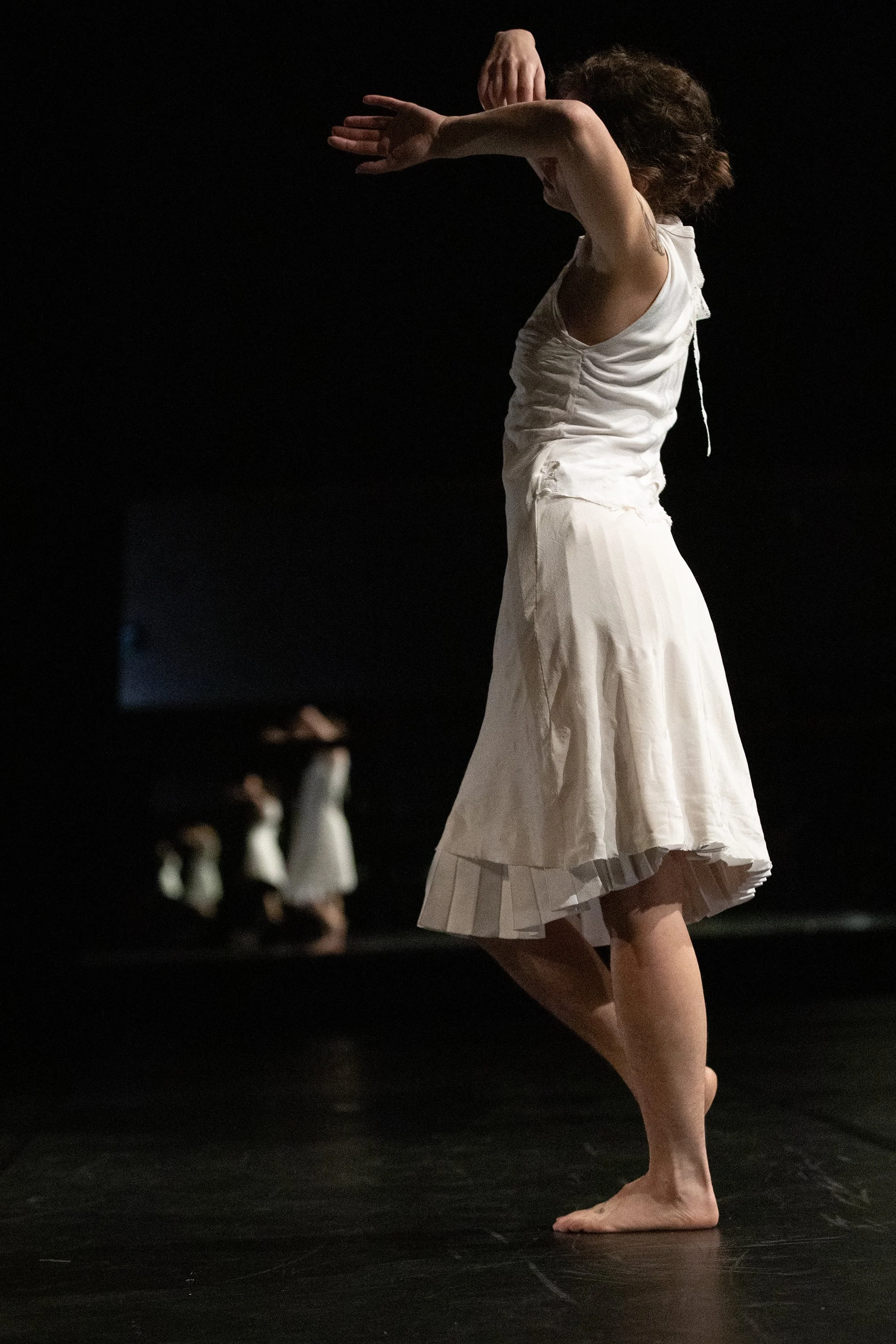
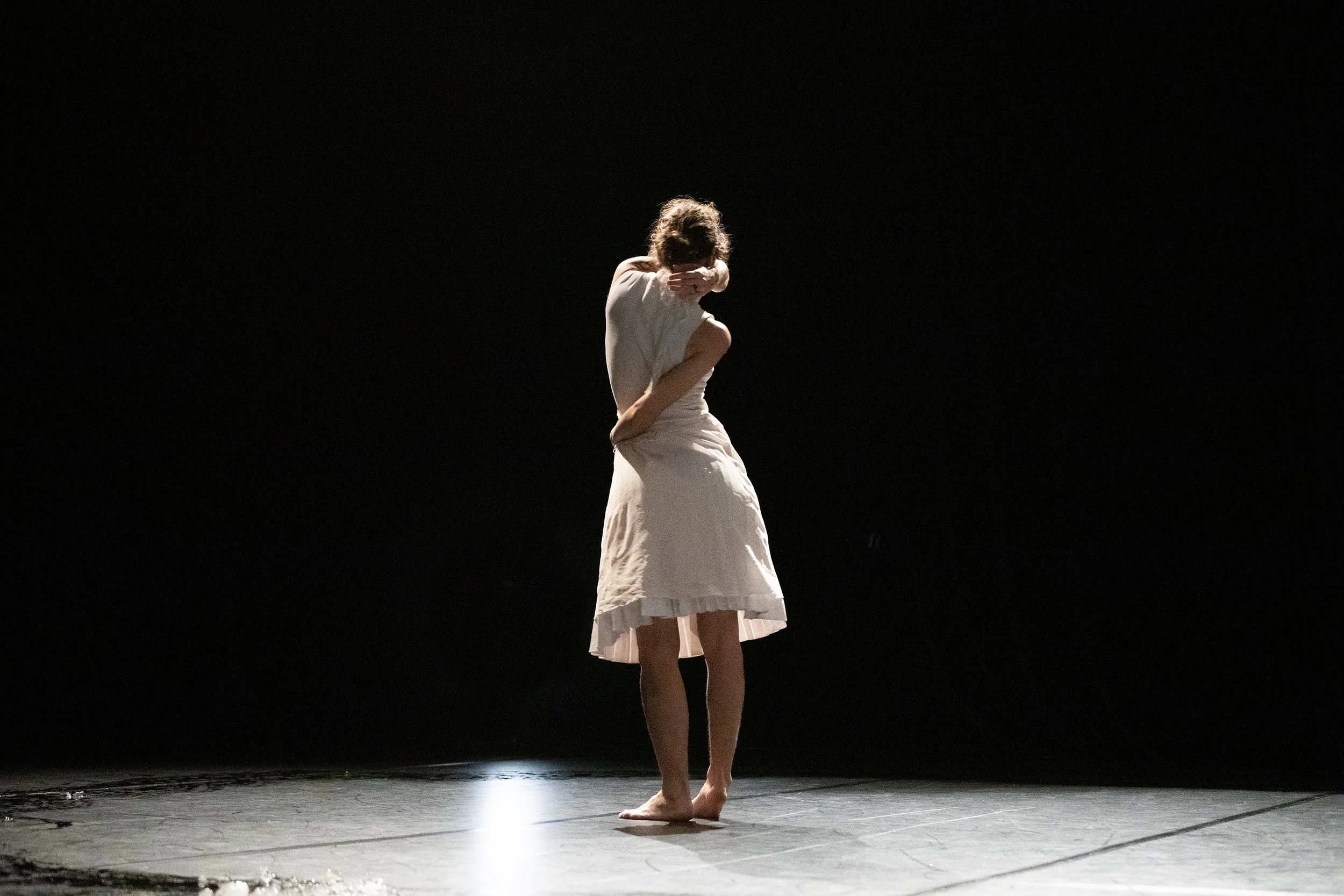
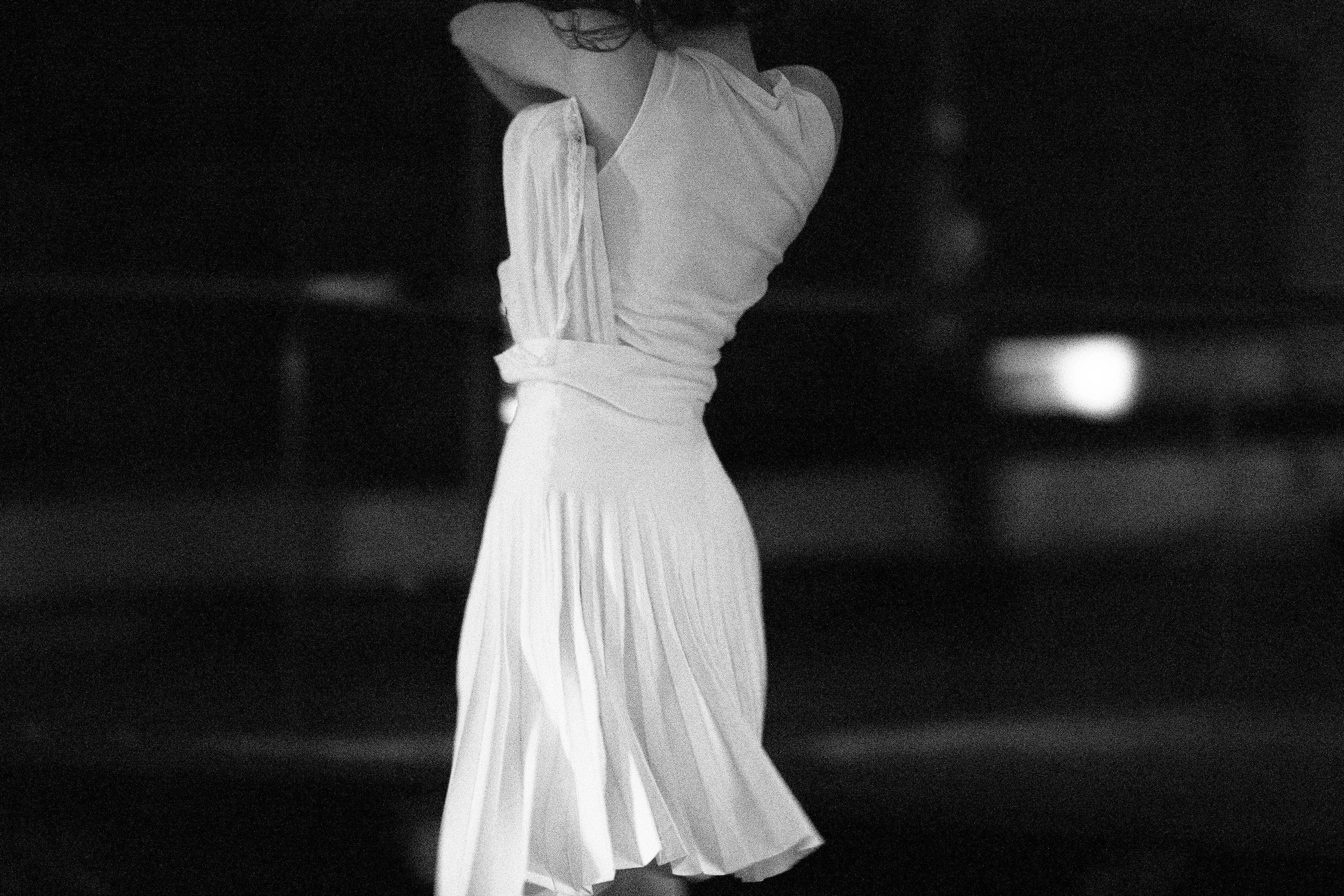
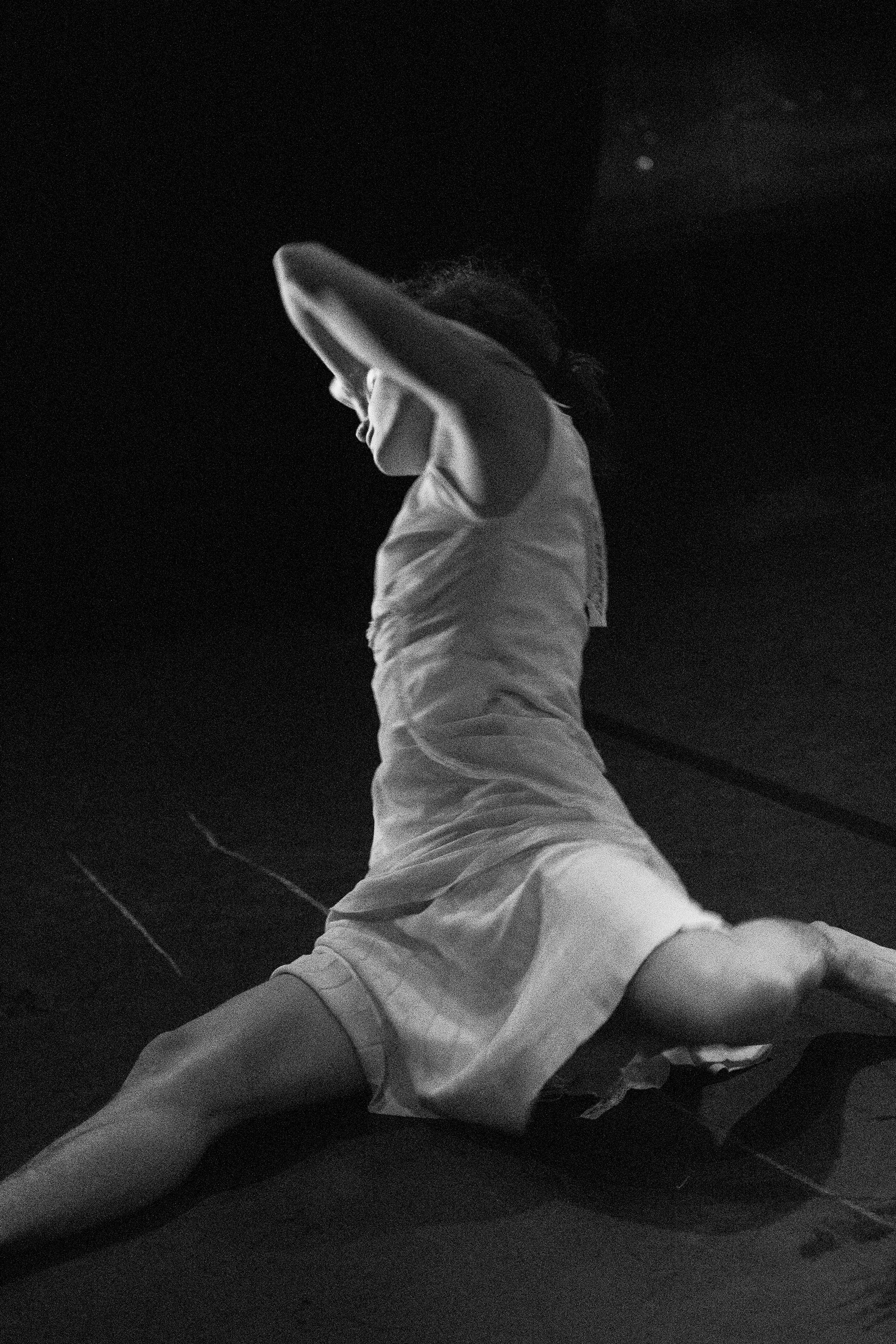
The costume for Stenochωreography was conceived as a dramaturgical tool—an active structure that supports transformation and reveals inner states. Built through layered construction, pleating, and fabric manipulation, the garment traces a passage from a school-uniform-like image of girlhood toward intimacy and ambiguity. It begins with a white T-shirt and pleated skirt, evoking discipline and the figure of a young girl reading her own thoughts. On the back—where the performer cannot see—the T-shirt is already coming apart, the fabric ripped and destabilized, as if something unseen is trying to catch or escape her.
The dense pleated skirt functions as protection and concealment, allowing the dancer to enter, fold into, and reshape it while moving. A second layer appears as a lace-detailed slip dress attached to an ordinary top, creating a dialogue between softness, intimacy, and everyday familiarity. Through loosening the neckline, the cups of the slip dress fall away, deconstructing the breast form and exposing the instability of gendered silhouettes. Each manipulation of the costume carries dramaturgical meaning, questioning not only what is considered feminine, but how garments perform roles and how they can be re-signified through movement.